Aesthetic Shelf Styling & Open Shelving Decor
When it comes to home design, the smallest details often make the biggest impact — and shelving is no exception. Once thought of as merely functional, shelves have now evolved into one of the most expressive and versatile elements of interior décor. From showcasing your favorite collectibles to displaying plants, books, and ceramics, Aesthetic Shelf Styling & Open Shelving Decor offers endless possibilities to infuse personality, texture, and warmth into your space.
Whether you live in a minimalist apartment, a modern farmhouse, or a cozy cottage, beautifully styled shelves can instantly elevate your home’s aesthetic while maintaining everyday functionality.
Aesthetic Shelf Styling & Open Shelving Decor
Why Shelf Styling Matters in Modern Interiors
Shelves do more than just hold items — they tell a story about you and your style. Well-curated open shelving can create focal points, balance visual weight in a room, and even change the perceived size of a space. It’s about blending form and function — making your shelves both beautiful and useful.
When thoughtfully arranged, shelves become mini design showcases, turning everyday items into art. The art of shelf styling lies in layering textures, balancing colors, and incorporating a variety of heights and shapes to create a cohesive look that feels intentional yet effortless.
Aesthetic Shelf Styling & Open Shelving Decor
1. The Core Principles of Aesthetic Shelf Styling
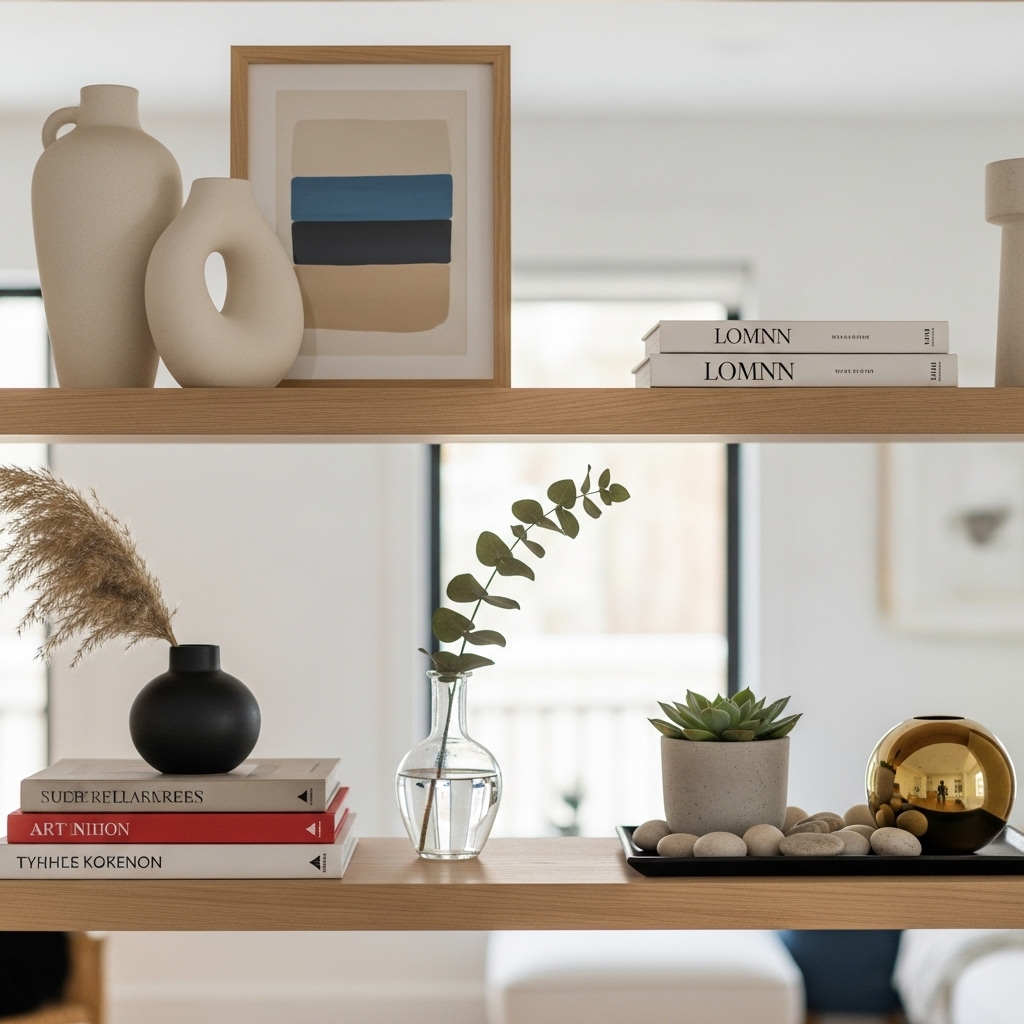
To master shelf styling, think of your shelves as a blank canvas. The goal is to find the right mix of beauty and balance. Here are the essential principles to guide you:
Balance and Symmetry
Balance doesn’t mean everything has to match perfectly, but the visual weight of your items should feel evenly distributed. Pair tall objects on one side with grouped smaller items on the other to maintain harmony.
Vary Heights and Shapes
Mixing different shapes and sizes creates movement and visual interest. For example, combine tall vases with shorter bowls, stack books horizontally, and lean frames vertically.
Create Layers
Instead of placing everything in a single line, layer items by placing some objects slightly in front of others. This adds depth and dimension to your display.
Leave Breathing Space
Negative space is your best friend. Avoid overcrowding shelves — giving each item room to stand out makes the overall arrangement more pleasing to the eye.
2. Choosing the Right Shelves for Your Space
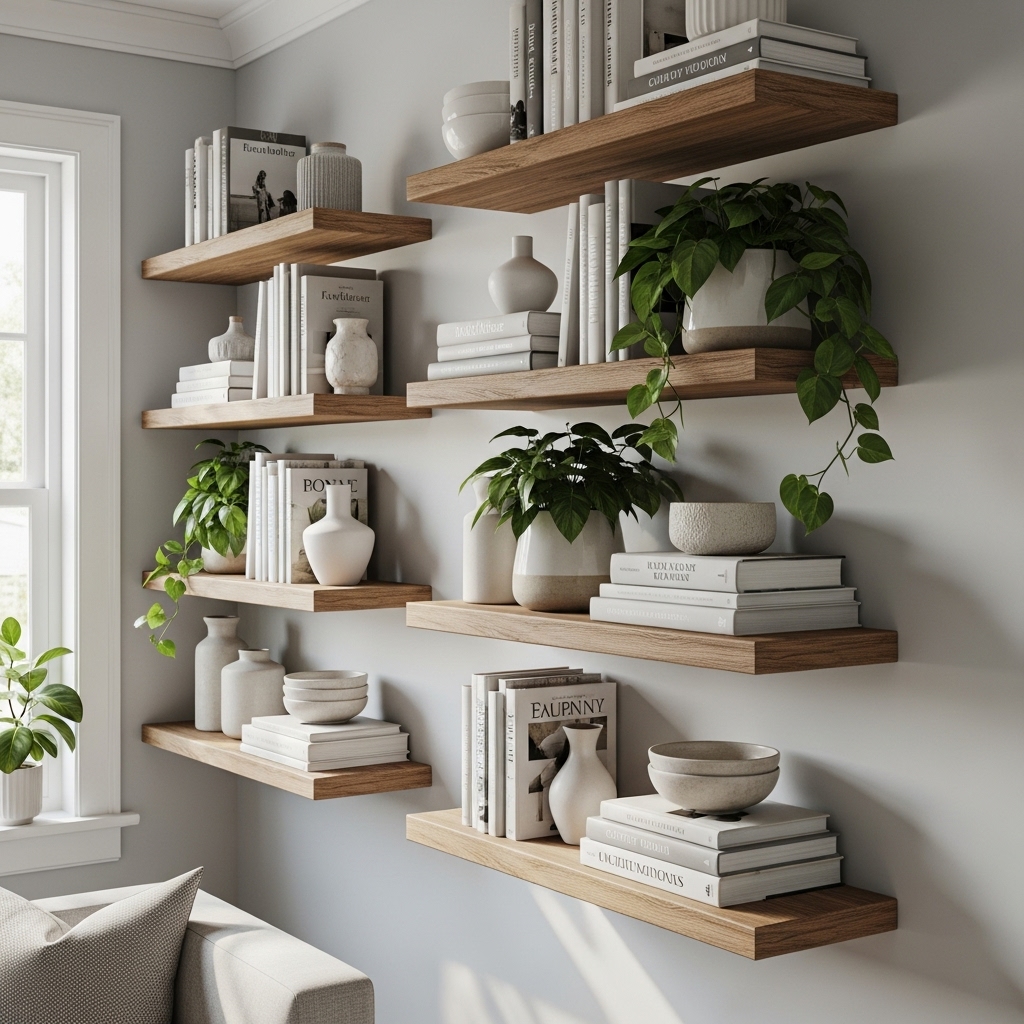
Before styling begins, choosing the right type of shelves is crucial. The material, color, and shape of your shelving can dramatically influence the mood of a room.
Floating Shelves
Sleek and modern, floating shelves work perfectly in minimalist or contemporary homes. They create the illusion of space and draw attention to the décor rather than the shelf itself.
Wooden Open Shelving
Ideal for Scandinavian, farmhouse, or boho styles, wood adds warmth and texture. Natural tones like oak or walnut are timeless, while painted finishes can bring a modern twist.
Metal and Glass Shelving
These materials suit industrial or modern spaces. Glass shelves with metal brackets offer a light and airy appearance, perfect for smaller rooms.
Built-In Shelving
Custom built-ins are excellent for maximizing wall space. They blend seamlessly into the room’s architecture and can be painted the same color as the walls for a cohesive look.
3. Curating a Cohesive Color Palette
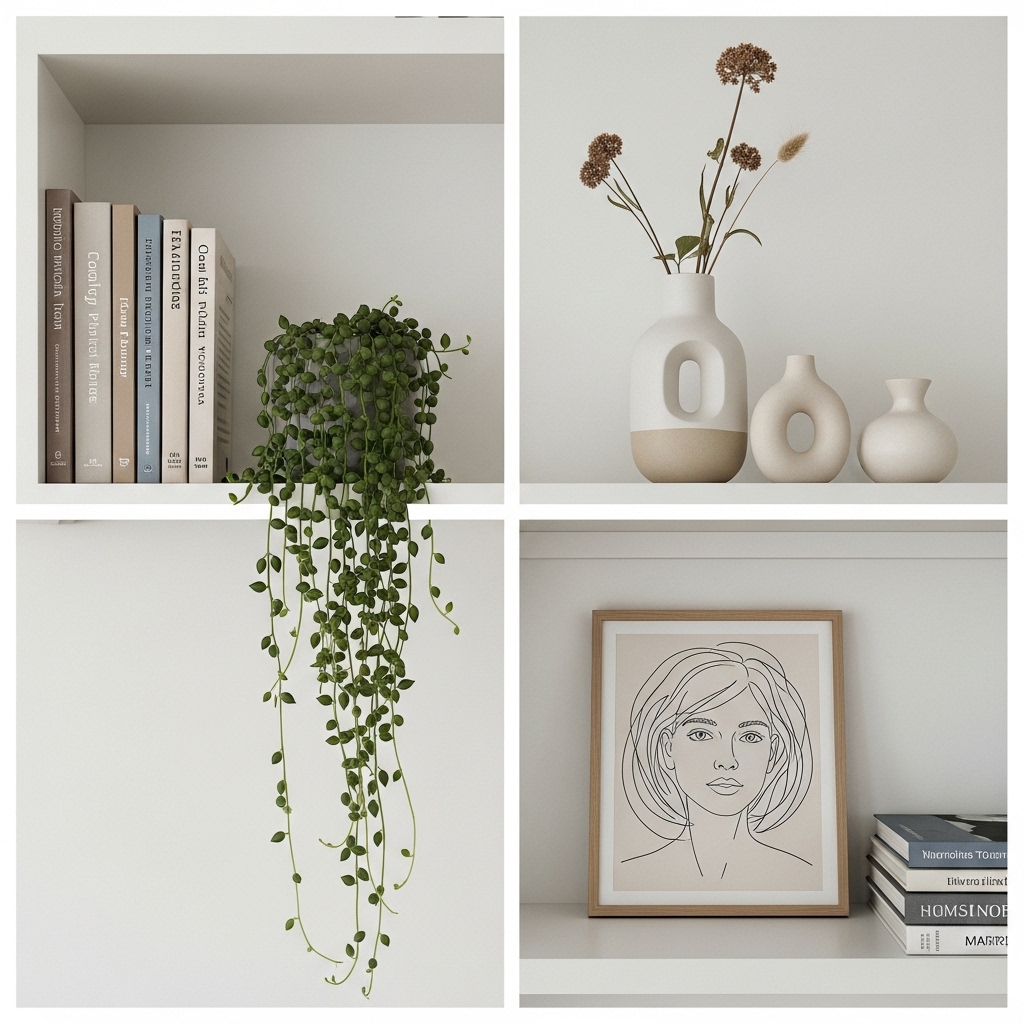
Your color scheme sets the tone for your entire display. To achieve aesthetic harmony:
- Stick to a neutral base (white, beige, wood tones, or black) for the shelves.
- Choose accent colors that complement your room’s palette — think earthy greens, soft blush, or muted blues.
- Repeat colors in small doses across different objects for consistency.
For instance, if your room features warm neutral tones, try combining white ceramics, tan leather accents, and wooden bowls for a grounded, organic feel. If your space leans modern, black frames, glass vessels, and crisp white books can maintain that sleek minimalism.
4. Incorporating Decorative Elements
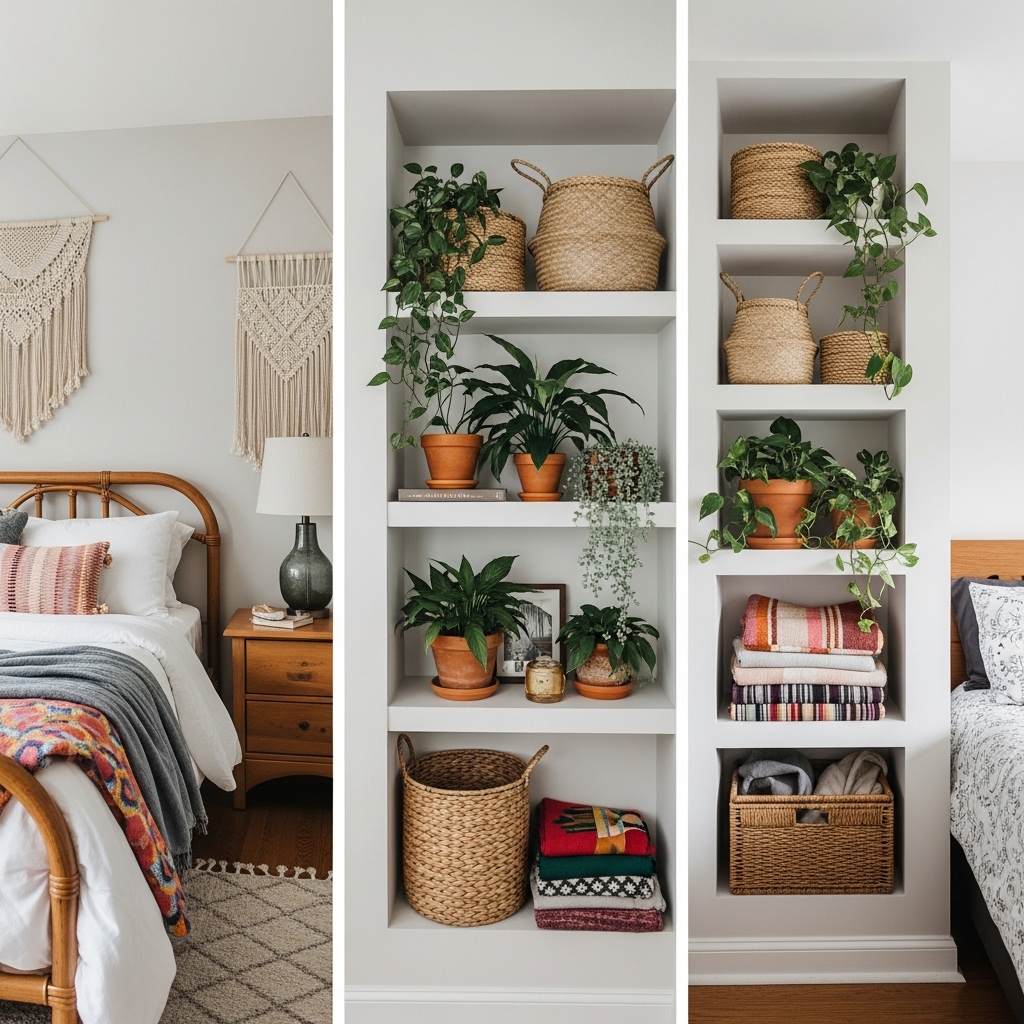
What you place on your shelves defines their character. Mix functional items with décor pieces to strike the right balance.
Books
Books are shelf-styling staples. Arrange them both vertically and horizontally, using them to elevate smaller decorative objects. Opt for neutral spines or remove dust jackets for a cleaner look.
Artwork and Frames
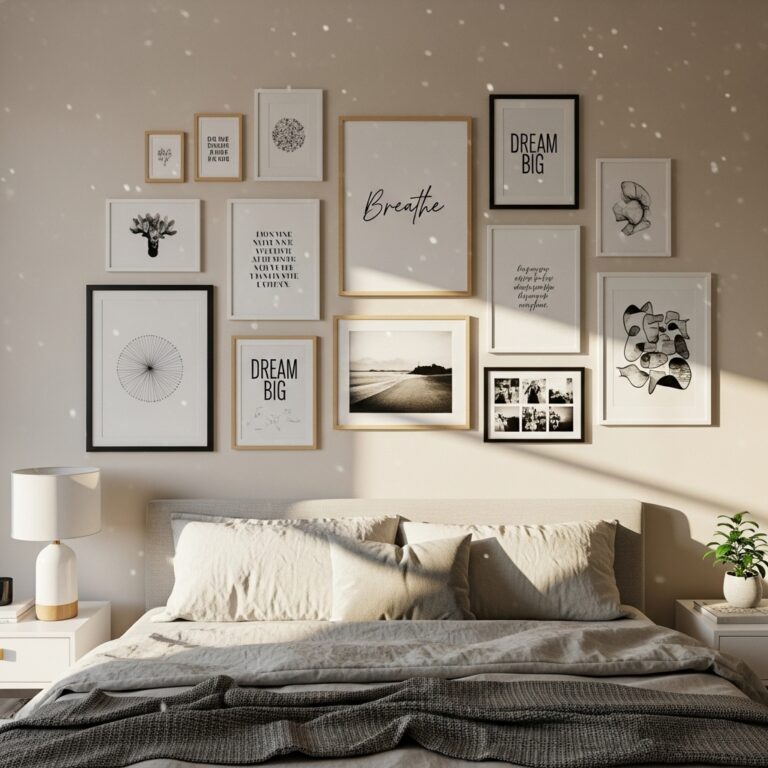
Lean or layer framed art prints against the back wall of the shelf. Choose prints that complement your home’s color palette for a curated gallery feel.
Plants and Greenery
Add life and freshness with houseplants. Cascading plants like pothos or string of pearls create organic movement, while small succulents and ferns add texture.
Ceramics and Sculptures
Unique pottery, vases, and sculptures add character and break up linear arrangements. Choose a mix of matte and glossy finishes for depth.
Baskets and Boxes
These are both functional and decorative — perfect for storing small items while maintaining a tidy, cohesive look.
Personal Touches
Family photos, travel souvenirs, or heirlooms make your shelving feel personal and meaningful. These details tell your story and keep the space from feeling staged.
5. Open Shelving in Different Rooms
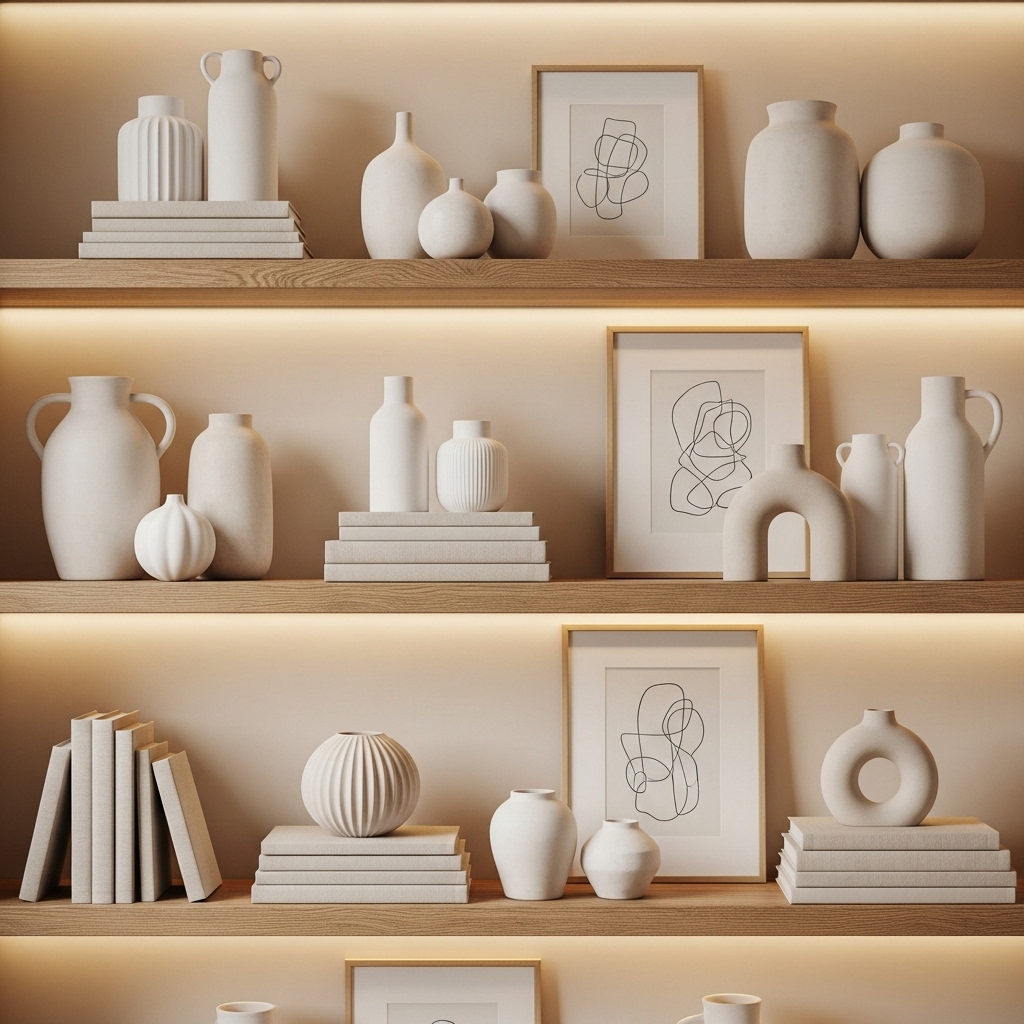
Open shelving isn’t just for living rooms. It’s a versatile design feature that enhances nearly every space in your home.
Kitchen Shelving
In the kitchen, open shelves are both practical and beautiful. Display your favorite dishes, glassware, and cookbooks. Keep the most-used items within reach while incorporating decorative touches like jars of dried herbs or wooden cutting boards for warmth.
Bathroom Shelving
Create a spa-like atmosphere by displaying neatly folded towels, candles, and small plants. Use trays or baskets to organize toiletries while keeping the look clean and intentional.
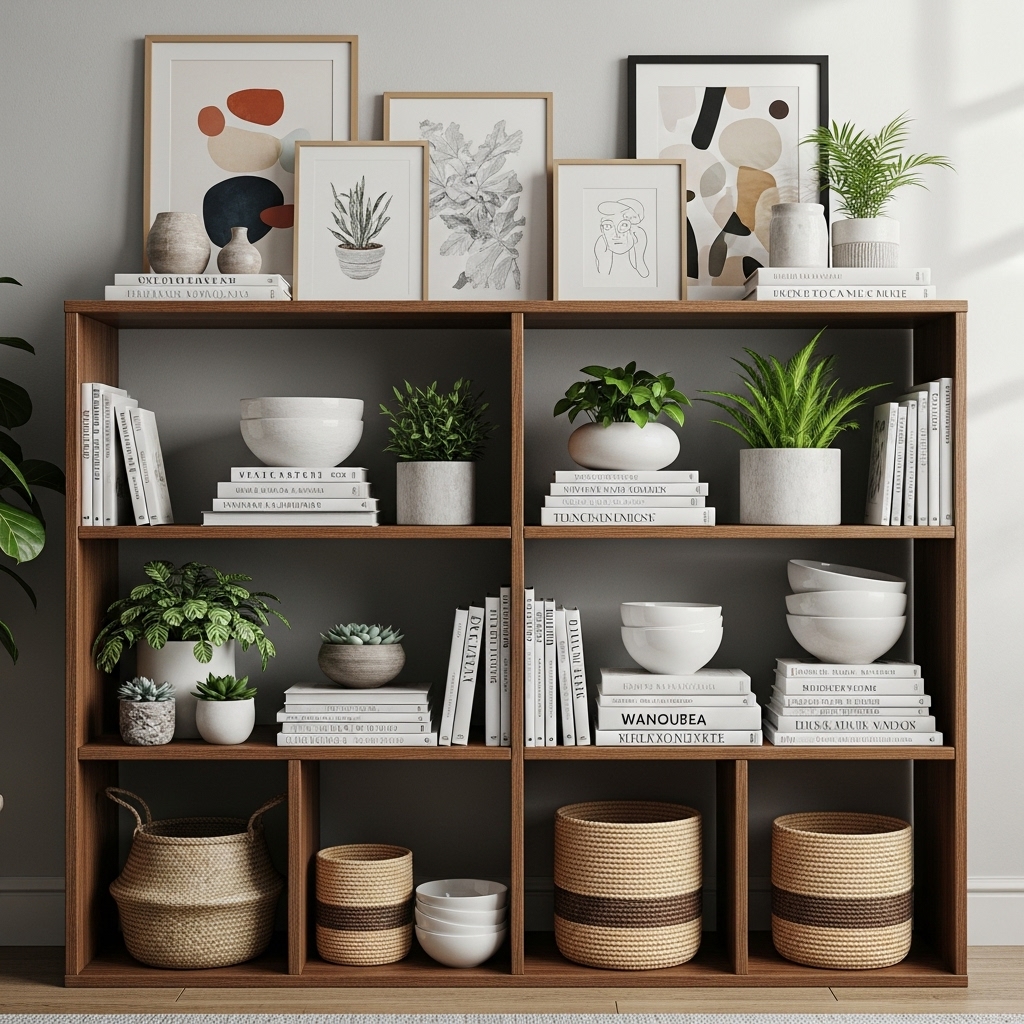
Living Room and Office
In living areas or home offices, open shelves offer opportunities to showcase art, framed quotes, and curated book collections. Mix practical storage with personal décor to keep it functional yet inviting.
Bedroom Shelving
Floating bedside shelves or wall-mounted displays can replace bulky nightstands. Add candles, books, and small vases for a minimalist yet cozy vibe.
6. Common Shelf Styling Mistakes to Avoid
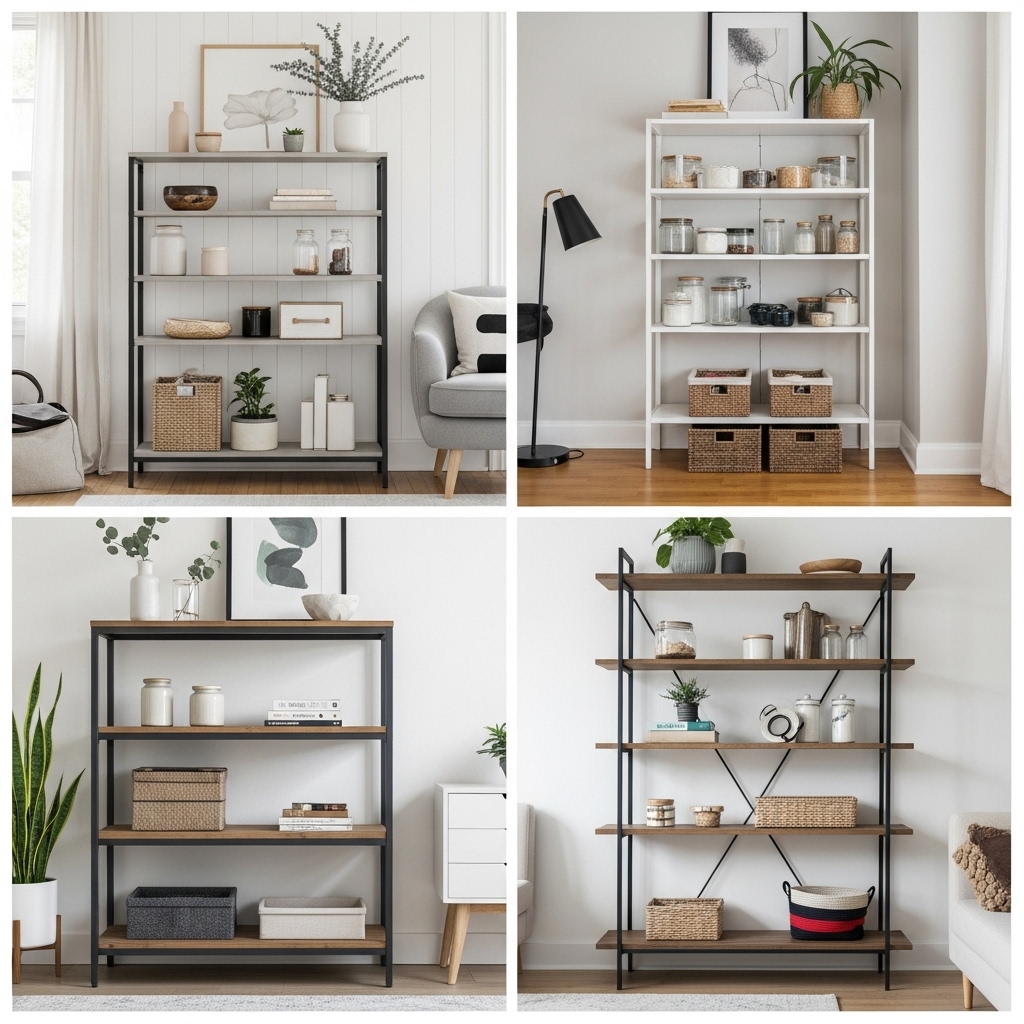
Even the most beautiful shelves can feel off if not styled thoughtfully. Avoid these common pitfalls:
- Overcrowding: Too many items make shelves feel cluttered. Less is more.
- Ignoring Scale: Avoid grouping only small objects — balance them with taller or larger items.
- Lack of Cohesion: Stick to a consistent color palette or style theme.
- No Personal Touch: Don’t make your shelves feel like a showroom. Add meaningful items to make them feel lived-in.
7. Tips for Keeping Your Shelves Fresh
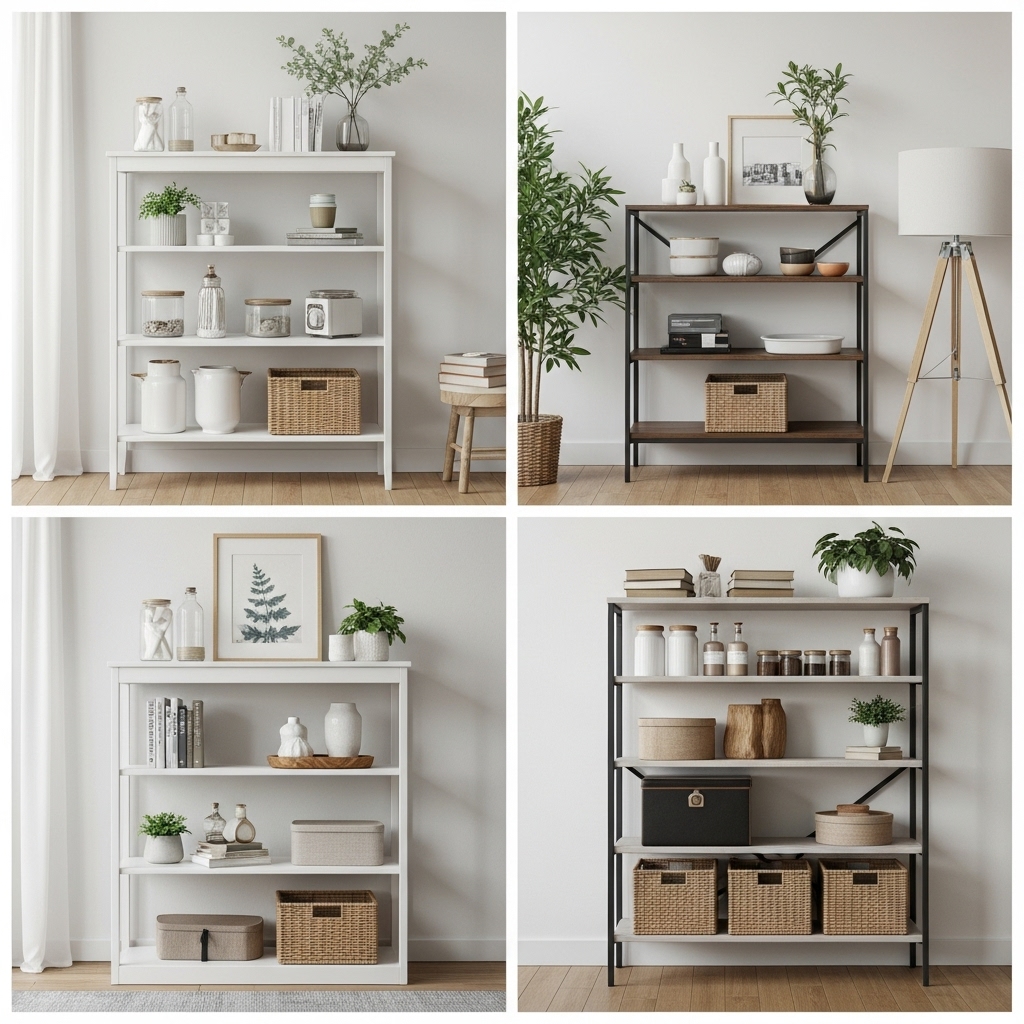
Shelf styling doesn’t have to be permanent — refresh it seasonally or when you redecorate other parts of your home. Rotate books, swap greenery, or switch out art prints to keep your shelves feeling dynamic and new.
Dust regularly and rearrange objects to maintain balance. Even small changes — like flipping the orientation of a few books or adding a new vase — can make a big impact.
8. Final Thoughts on Aesthetic Shelf Styling & Open Shelving Decor
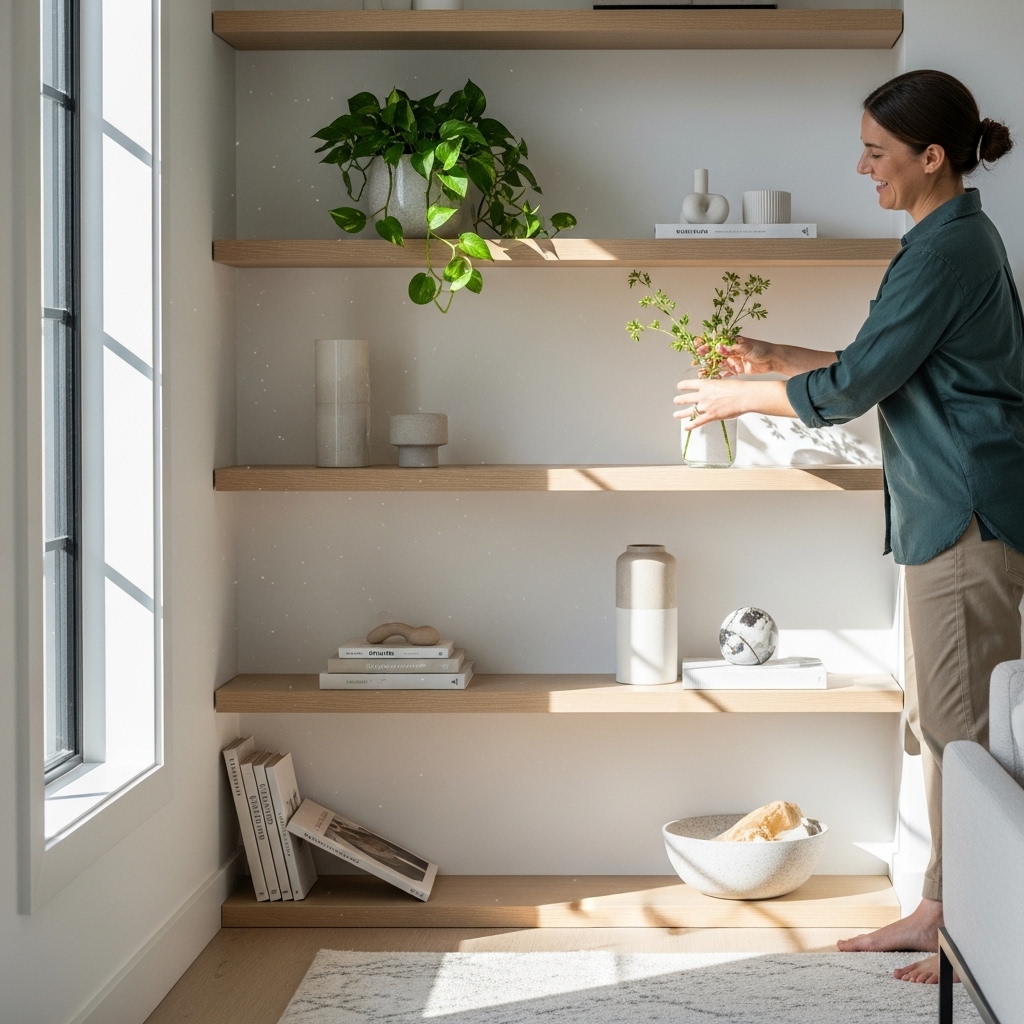
Open shelving is the perfect opportunity to express your personal style while enhancing your home’s design. Whether you prefer a minimalist, rustic, or eclectic look, the key lies in balance, cohesion, and authenticity.
Through Aesthetic Shelf Styling & Open Shelving Decor, you can transform even the simplest wall into a work of art that reflects your taste, lifestyle, and creativity. It’s more than just decoration — it’s storytelling through design.
So take a step back, edit what you display, and embrace the beauty of intentional simplicity. Your shelves can become the heart of your home — a place where form meets function, and where every object has meaning.