Indoor Zen Garden Ideas for Stress-Free Living: Create a Calm, Mindful Sanctuary at Home
Indoor Zen Garden

In today’s fast-paced world, finding moments of peace at home is more important than ever. One simple yet powerful way to invite calm into your daily routine is by creating an indoor Zen garden. Rooted in Japanese philosophy, Zen gardens are designed to promote mindfulness, balance, and inner stillness. With the right elements, even a small corner of your home can become a tranquil retreat that supports relaxation and emotional well-being. This guide explores Indoor Zen Garden Ideas for Stress-Free Living, helping you design a serene space that nurtures your mind and soothes your senses.
What Is an Indoor Zen Garden?
A Zen garden, also known as a Japanese rock garden or karesansui, traditionally uses elements like sand, stones, and minimal greenery to represent nature in an abstract form. Indoors, this concept is adapted into smaller, more flexible designs that fit modern homes. An indoor Zen garden can be as compact as a tabletop arrangement or as immersive as a dedicated meditation room. The purpose remains the same: to create a space that encourages quiet reflection, focus, and calm Indoor Zen Garden.

Unlike decorative houseplants or typical home décor, a Zen garden emphasizes simplicity and intention. Every object has meaning, and nothing is included without purpose. This minimalist approach helps reduce visual clutter, which in turn reduces mental clutter.
The Benefits of an Indoor Zen Garden
Creating a Zen garden inside your home offers both aesthetic and psychological benefits. One of the most significant advantages is stress reduction. The act of arranging stones, raking sand, or simply observing the garden can have a meditative effect, slowing your breathing and calming your thoughts Indoor Zen Garden.
Indoor Zen gardens also improve focus and mindfulness. Many people place them in home offices or reading nooks to create a grounding environment that supports concentration. Additionally, these gardens bring a subtle connection to nature indoors, which has been shown to improve mood and overall well-being, especially for those who live in urban environments with limited outdoor access.
Choosing the Right Space in Your Home
Before designing your Zen garden, it’s important to choose the right location. Ideally, this should be a quiet area where you can relax without frequent interruptions. A corner of your living room, a bedroom alcove, a windowsill, or even a bathroom shelf can work well.
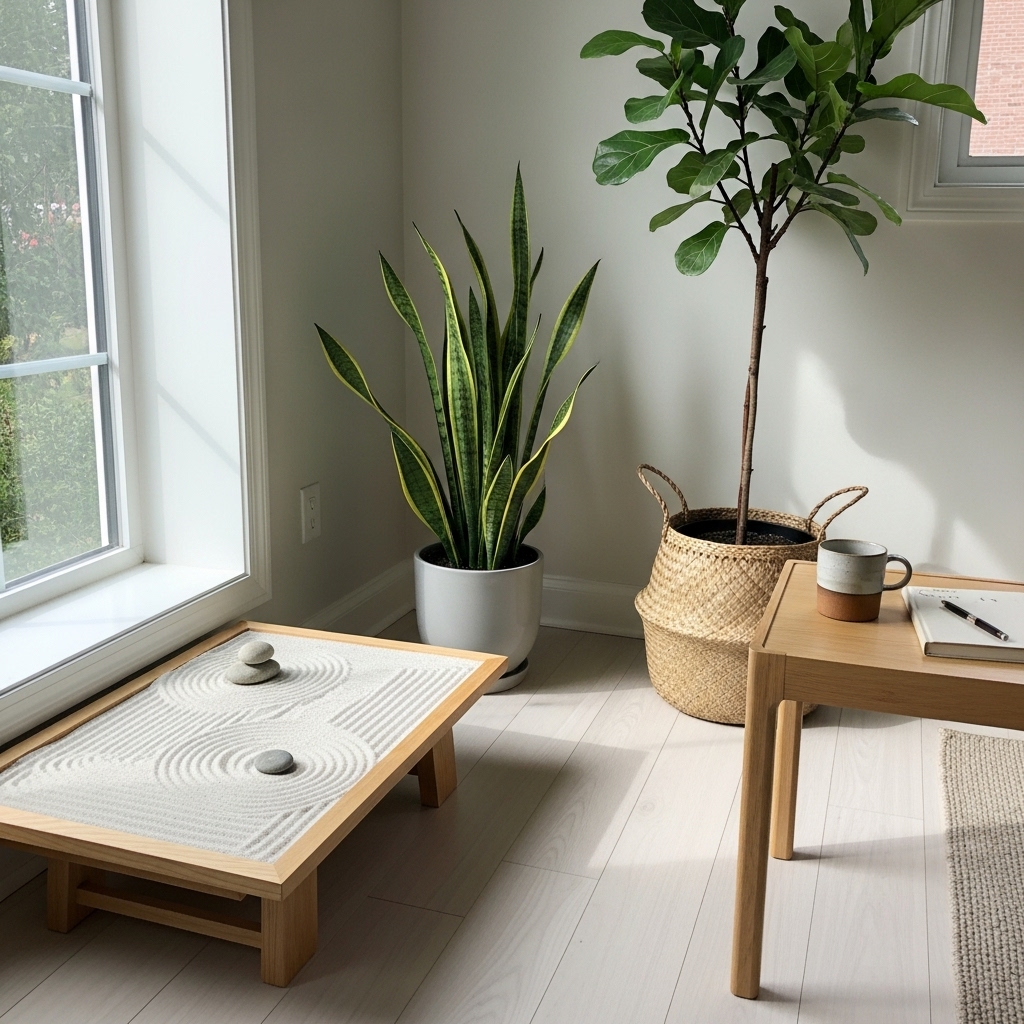
Lighting is another key factor. Natural light enhances the calming effect of a Zen garden, so placing it near a window is ideal. If natural light is limited, soft artificial lighting, such as warm LED lamps or indirect lighting, can create a soothing ambiance without overwhelming the space.
Essential Elements of an Indoor Zen Garden
While Zen gardens are minimal by design, a few core elements help define their look and feel.
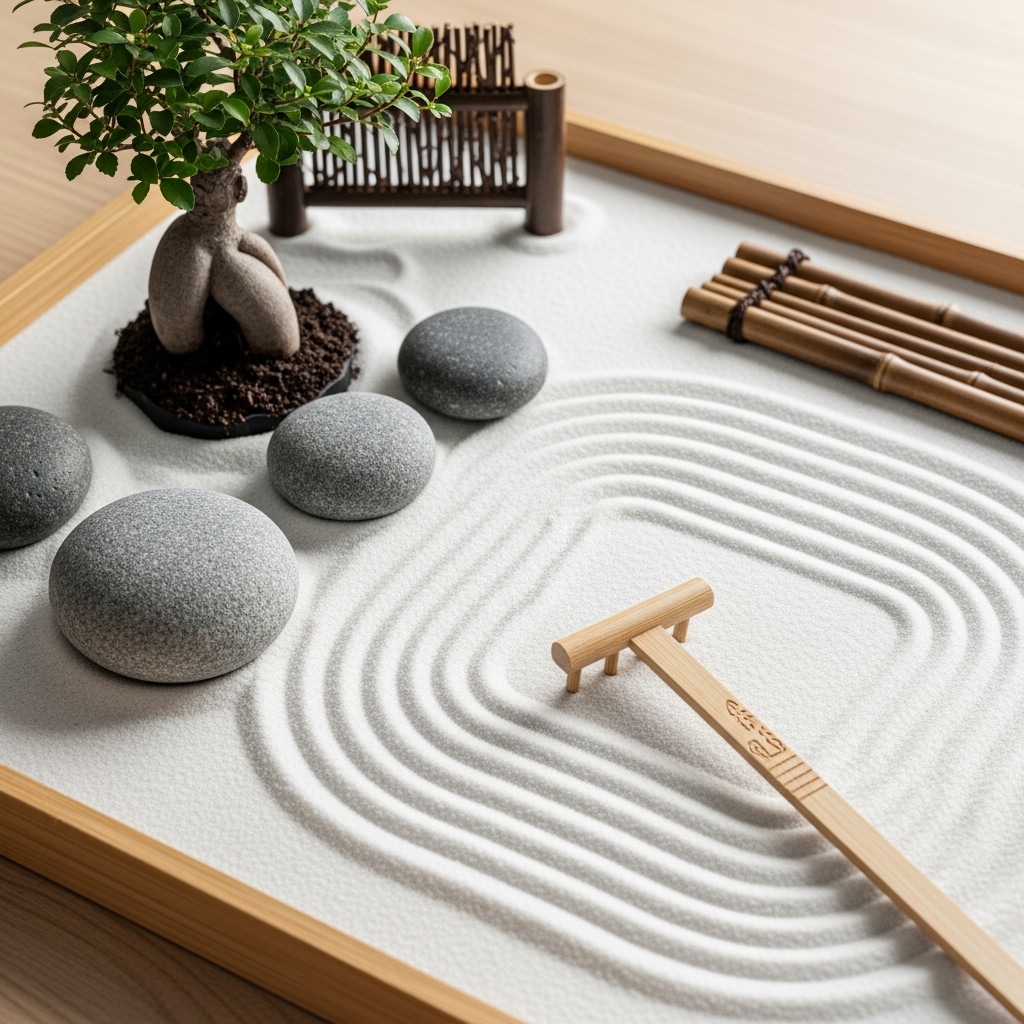
Sand or gravel is often the foundation. White or neutral-colored sand represents water and emptiness, creating a sense of openness. Many people enjoy raking patterns into the sand as a calming ritual.
Stones and rocks symbolize mountains, islands, or stability. Choose smooth, natural stones in muted tones and arrange them asymmetrically for a more authentic Zen aesthetic.
Plants should be used sparingly. Small bonsai trees, moss, bamboo, or succulents are popular choices because they add life without overwhelming the space. The goal is harmony, not abundance.
Accessories like miniature bridges, lanterns, or wooden elements can be included, but only if they serve a purpose and don’t distract from the overall simplicity.
Tabletop Zen Garden Ideas for Small Spaces
If you’re short on space, a tabletop Zen garden is an excellent option. These compact gardens are easy to set up and maintain, making them perfect for apartments or desks. A shallow tray filled with sand, a few carefully chosen stones, and a small rake can instantly transform your workspace into a calming zone.
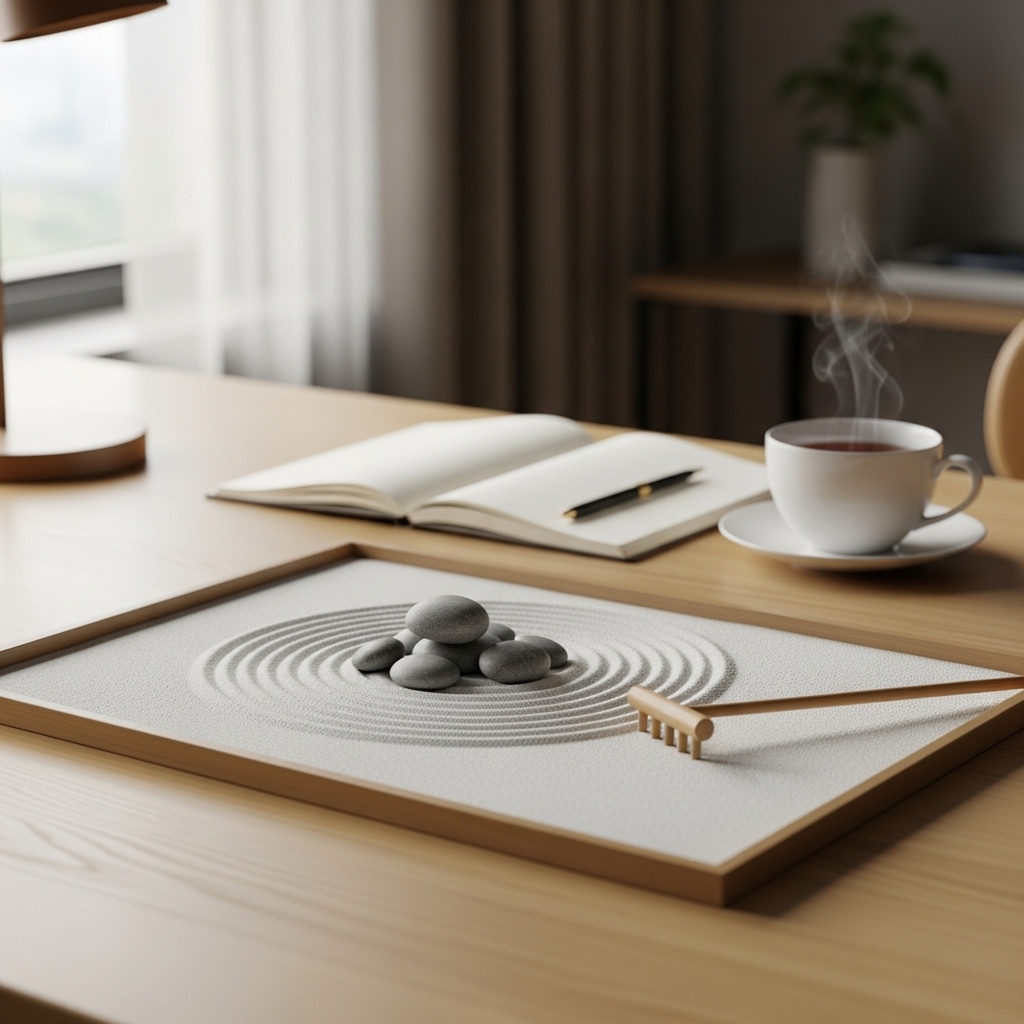
Place your tabletop Zen garden where you can interact with it during breaks. Taking a few minutes to rake the sand or rearrange stones can help reset your mind during a busy day. This small ritual can be surprisingly effective in reducing stress and restoring focus.
Creating a Meditation-Focused Zen Corner
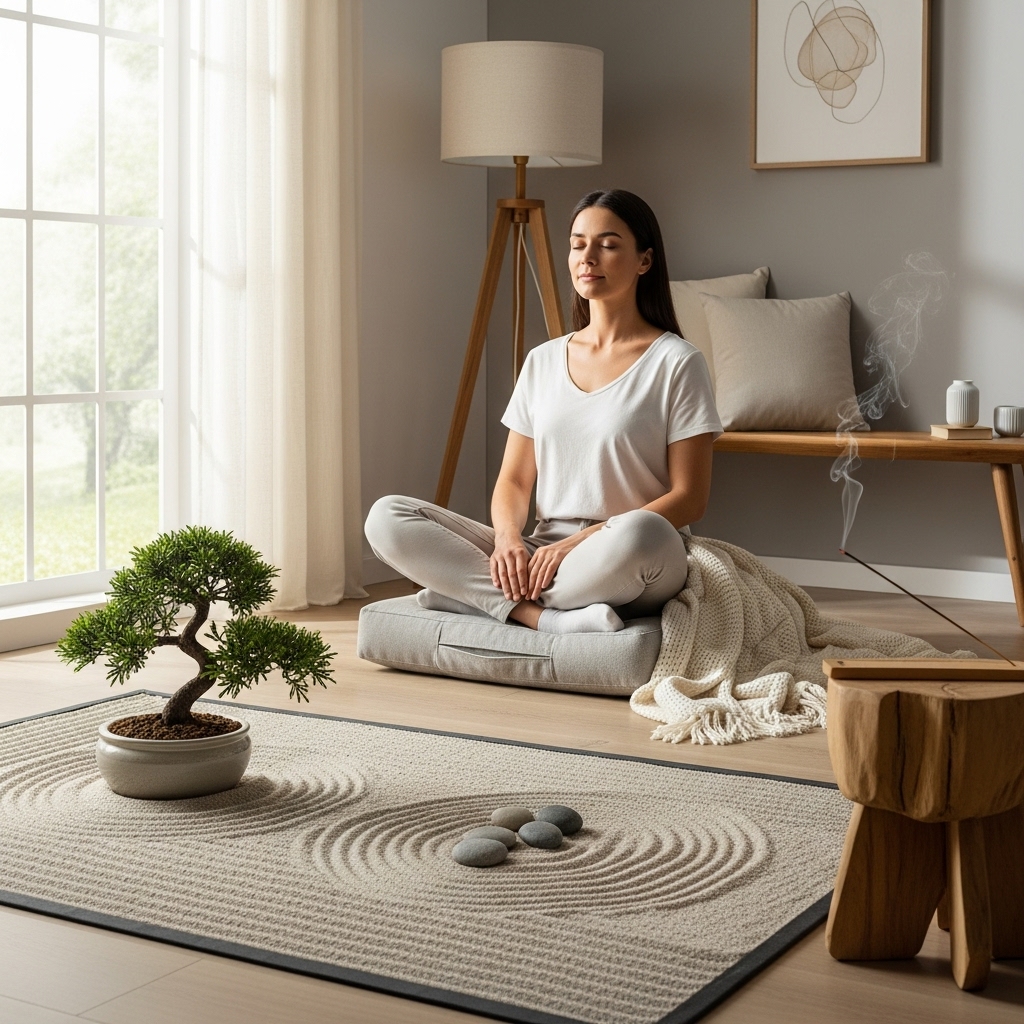
For those who want a deeper sense of tranquility, consider dedicating a corner of your home to meditation and mindfulness. This type of Zen garden goes beyond decoration and becomes a functional wellness space.
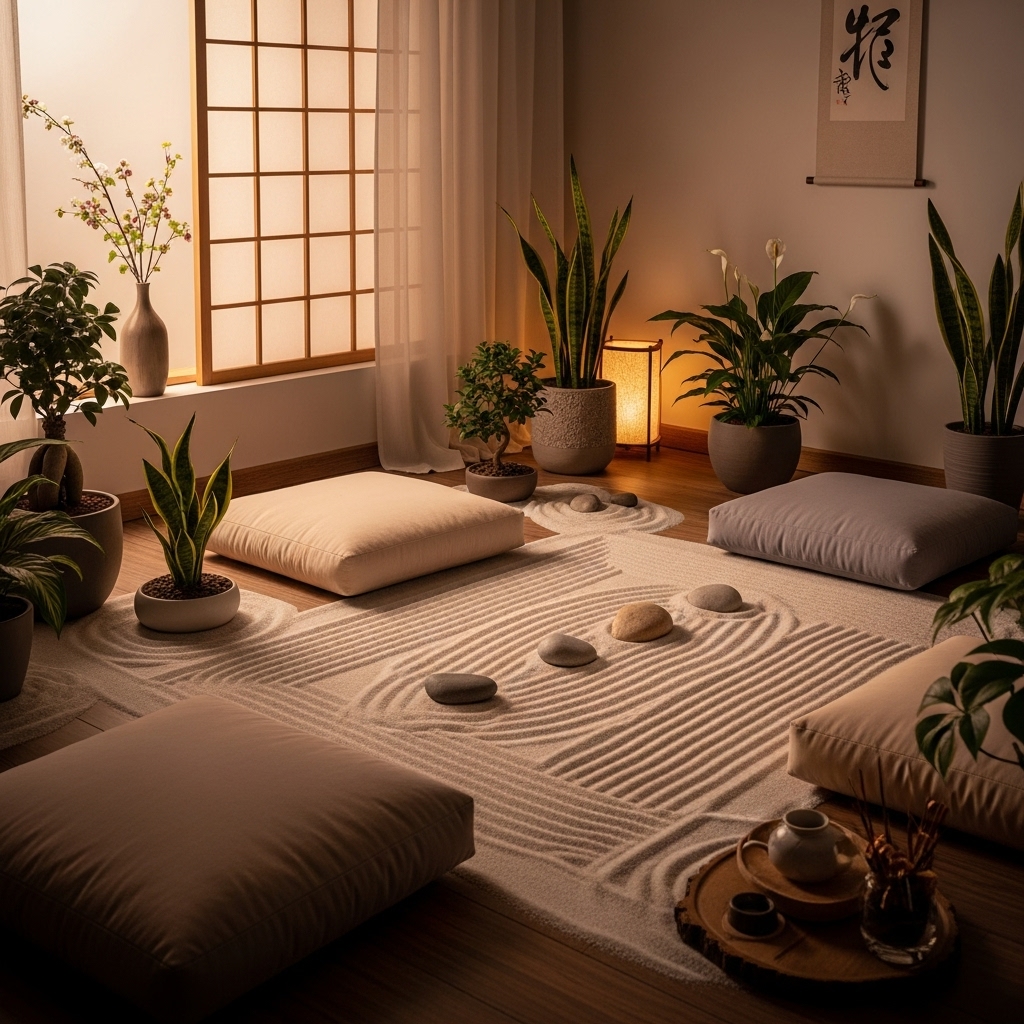
Start with a neutral color palette for the surrounding area. Soft whites, beiges, and earthy tones help create a peaceful backdrop. Add floor cushions or a meditation mat near your Zen garden so you can sit comfortably while reflecting or practicing mindfulness. A small indoor water feature or a subtle sound element, like a gentle chime, can further enhance the calming atmosphere.
Incorporating Zen Principles into Modern Interiors
One of the strengths of Zen design is its versatility. Indoor Zen gardens can blend seamlessly with modern, minimalist, or even Scandinavian interiors. The key is consistency in materials and colors. Natural wood, stone, and neutral fabrics work well together and reinforce the sense of calm.
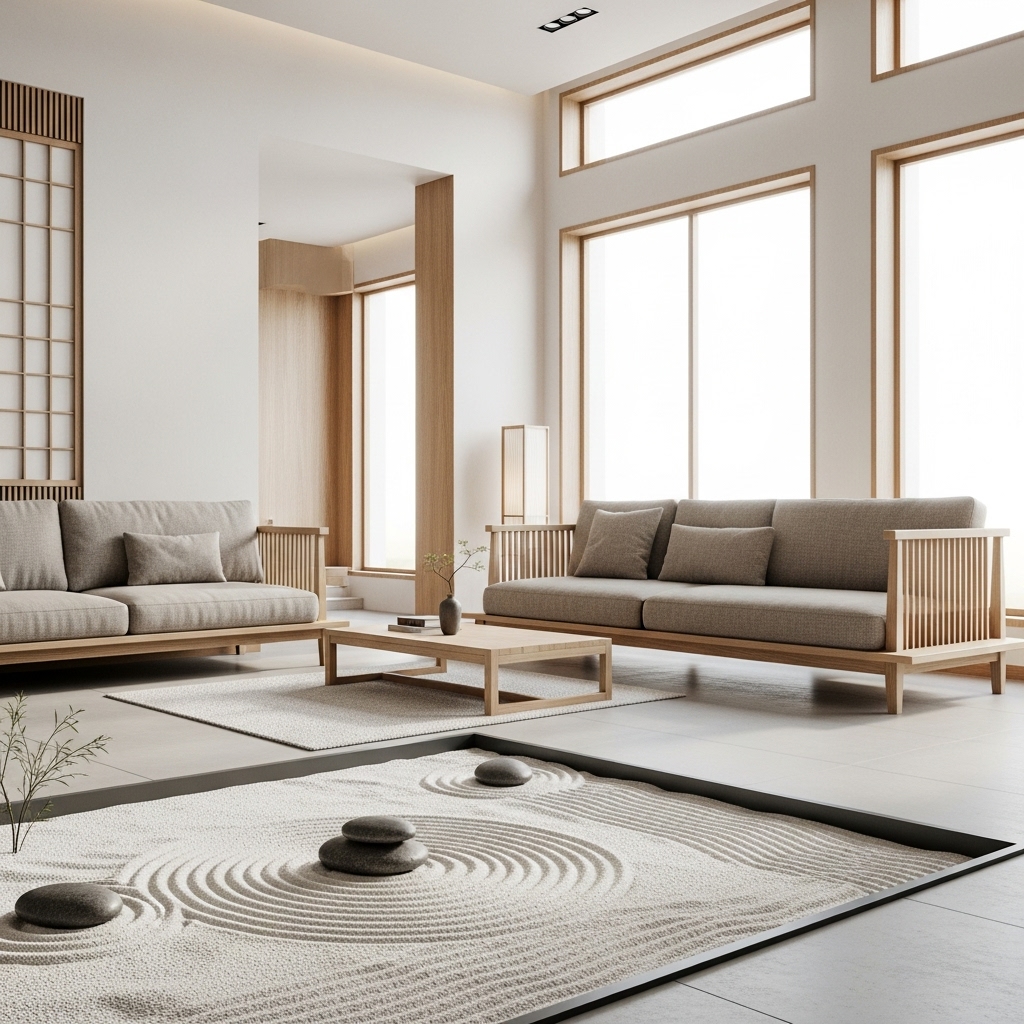
Avoid overcrowding the area around your Zen garden with unrelated décor. Negative space is an essential part of Zen philosophy, allowing the mind to rest. By keeping the surrounding area uncluttered, your Zen garden becomes a visual anchor of peace within your home.
Maintenance and Mindful Care
An indoor Zen garden requires very little maintenance, which adds to its appeal. Regularly smooth the sand, dust the stones, and water plants only as needed. This gentle upkeep can become a mindful practice in itself, encouraging you to slow down and be present.
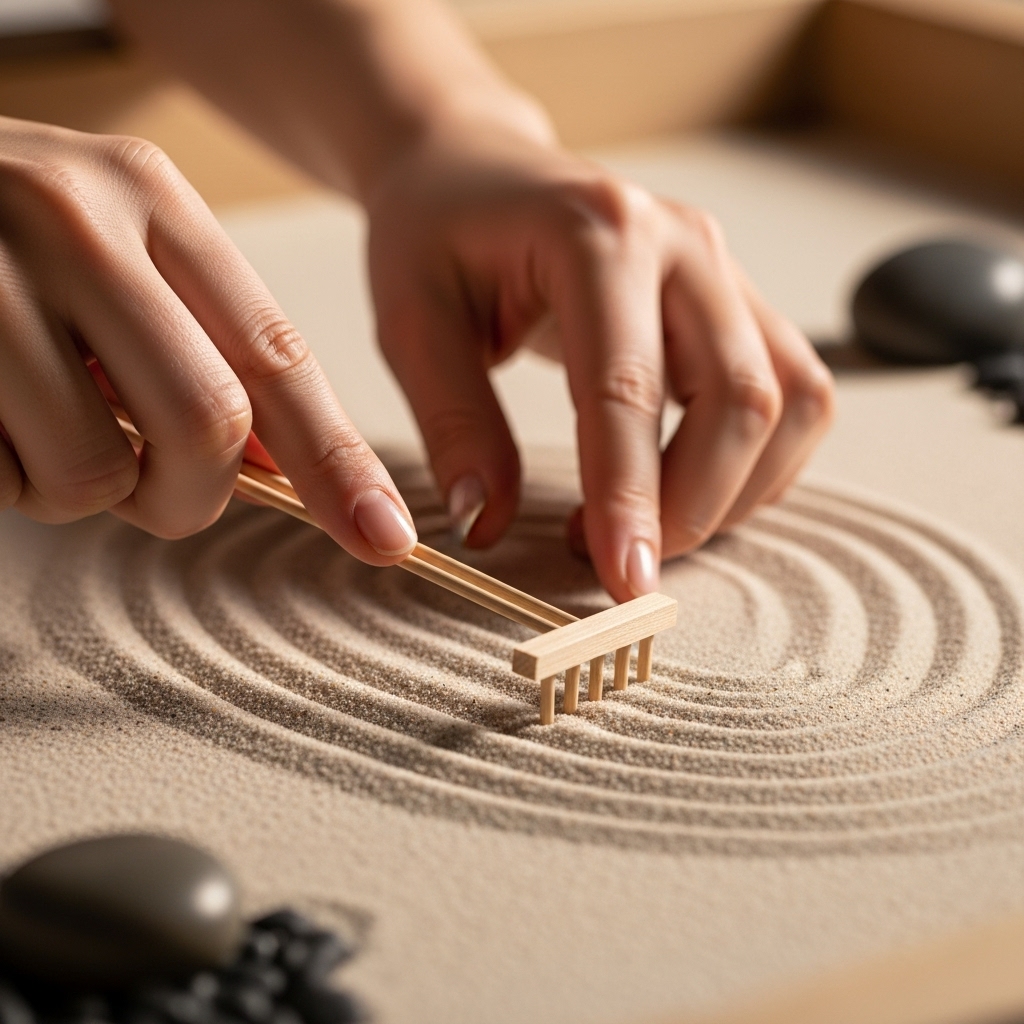
Unlike traditional houseplants that may feel like chores, caring for a Zen garden is about intention rather than obligation. Each small action, whether adjusting a stone or trimming a plant, reinforces mindfulness and calm.
Personalizing Your Zen Garden Experience
While Zen gardens are rooted in tradition, personalization is encouraged. Your garden should reflect what brings you peace. Some people incorporate crystals for symbolic meaning, while others include a meaningful object like a small statue or a piece of driftwood.
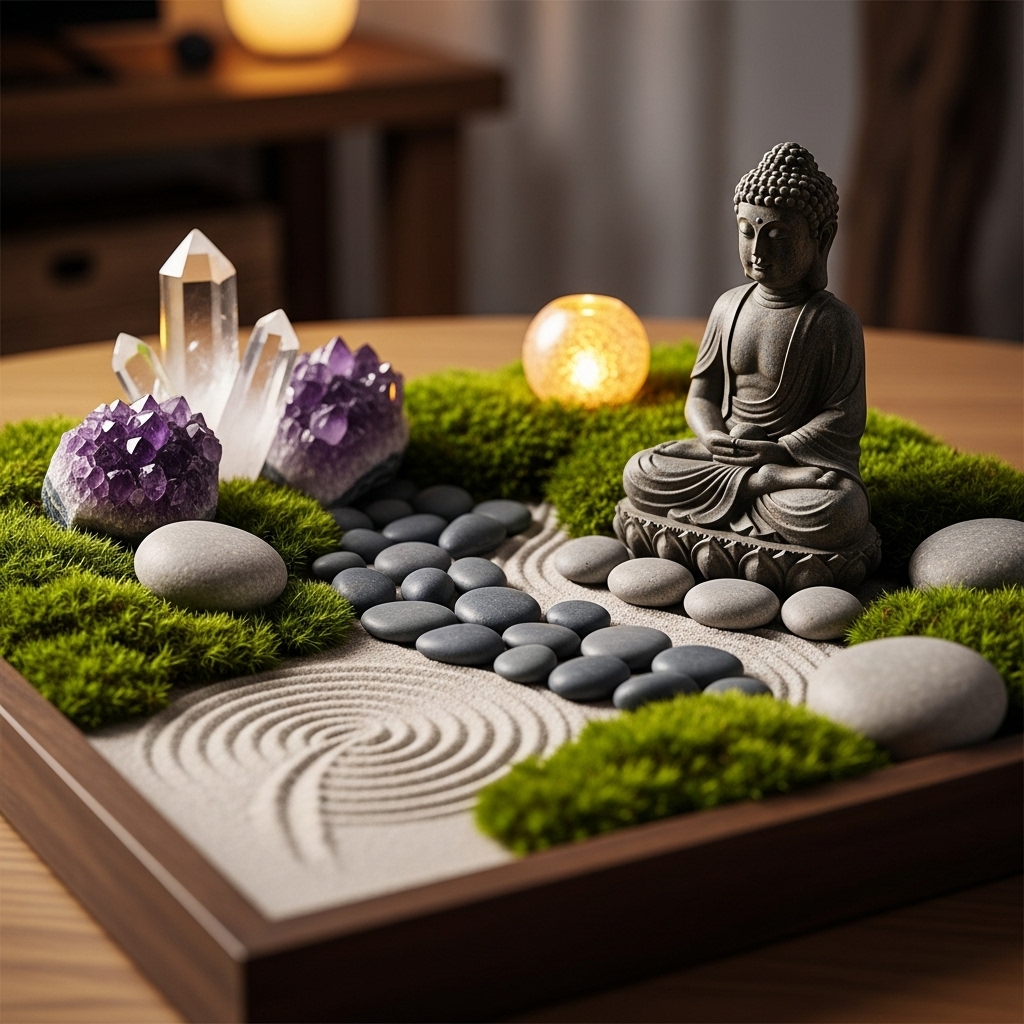
The most important aspect is how the space makes you feel. If your Zen garden invites you to pause, breathe, and let go of stress, then it’s fulfilling its purpose.
Final Thoughts
Designing a Zen garden indoors is more than a home décor trend; it’s a lifestyle choice that supports mental clarity and emotional balance. Whether you opt for a simple tabletop arrangement or a dedicated meditation corner, these Indoor Zen Garden Ideas for Stress-Free Living can help transform your home into a sanctuary of calm. By embracing simplicity, natural elements, and mindful design, you create not just a beautiful space, but a daily reminder to slow down and reconnect with yourself.